
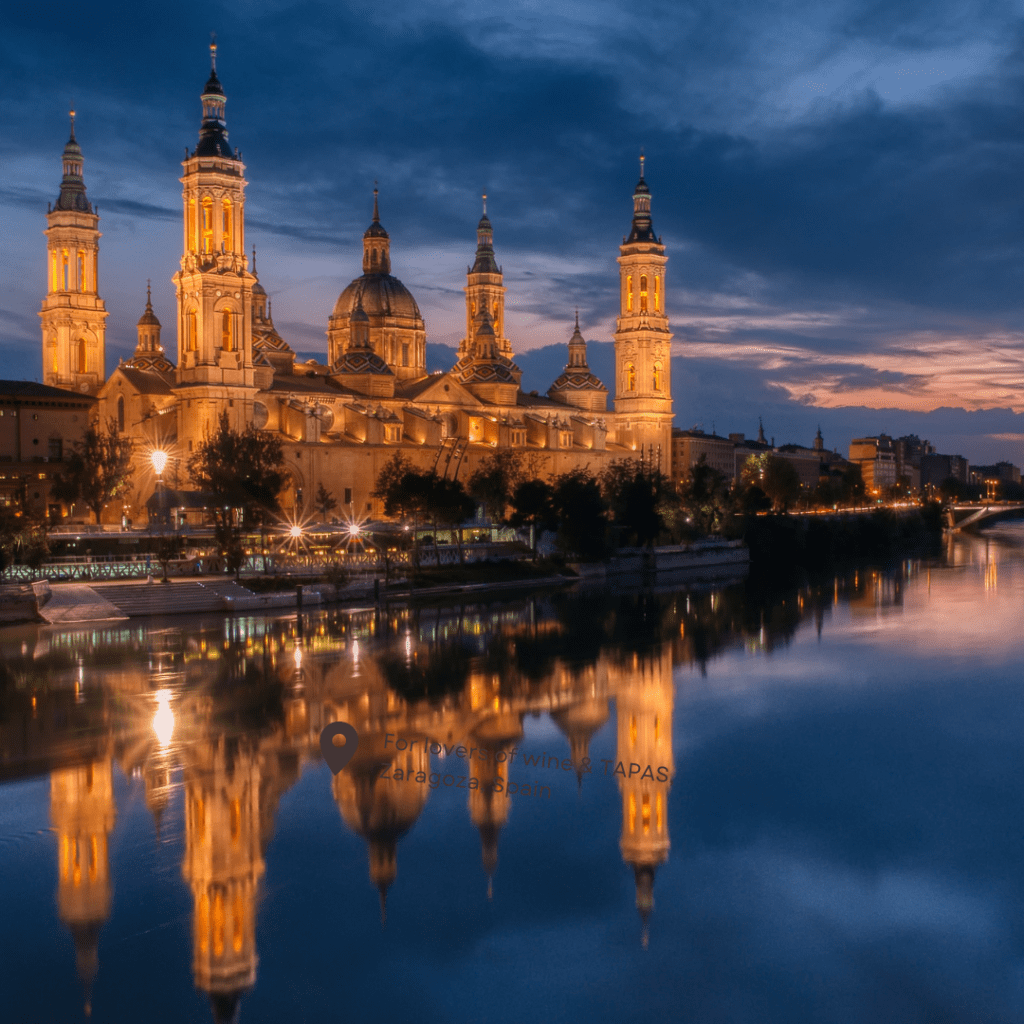
An inconspicuous city at first glance, but if you love good food, Spanish wine, TAPAS, architecture, art or history, you are in the right, place. Welcome to the town of Zaragoza, in northeastern Spain, in the region of Aragon.

WHEN TO GO TO ZARAGOZA?
The town is inland and the sea is quite far away. Summers here are hot and dry, winters are cold. The best time to visit is spring (March – May) or autumn (September – October). The temperatures are pleasant, the rain is minimal and you won’t get tired of the typical summer heat months.
HOW LONG TO BE IN ZARAGOZA?
Zaragoza is perfect for a long weekend. Whether you love food, art, history, architecture, you will find a bit of everything here.

HOW TO GET FROM THE AIRPORT TO THE CITY CENTER?
1, Airport bus 501
The Airport bus (line 501) runs between Zaragoza Airport and bus stop Paseo Maria Agustin (Puerta del Carmen) near the centre of the city, travel time is 30 – 45 minutes. The bus makes several stops, including stops at Plaza Imperial (Feria de Zaragoza) and Estación Intermodal. The last mentioned stop is at the central train and bus station of Zaragoza. The main railway station Zaragoza-Delicias is located 2 kilometres from the centre of the city. The Airport bus departs Monday till Saturday twice per hour, on Sundays and holidays the bus runs once every hour. A ticket for a single journey (Billete Sencillo) costs around 2€ and can be purchased from the bus driver. Every day of the week the last bus from the airport leaves at 23:15 hours, the first bus from the city departs at 05:30 hours.
2, Bus 604
Another bus (line 604) runs straight to the city of Zaragoza, but in order to get on this bus you’ll have to walk for 12 minutes to bus stop Carretera del Aeropuerto. In addition to buses, you can travel by modern trams or taxi in Zaragoza. Please check website and timetable Airport bus for more information.
FREE THINGS TO DO IN ZARAGOZA
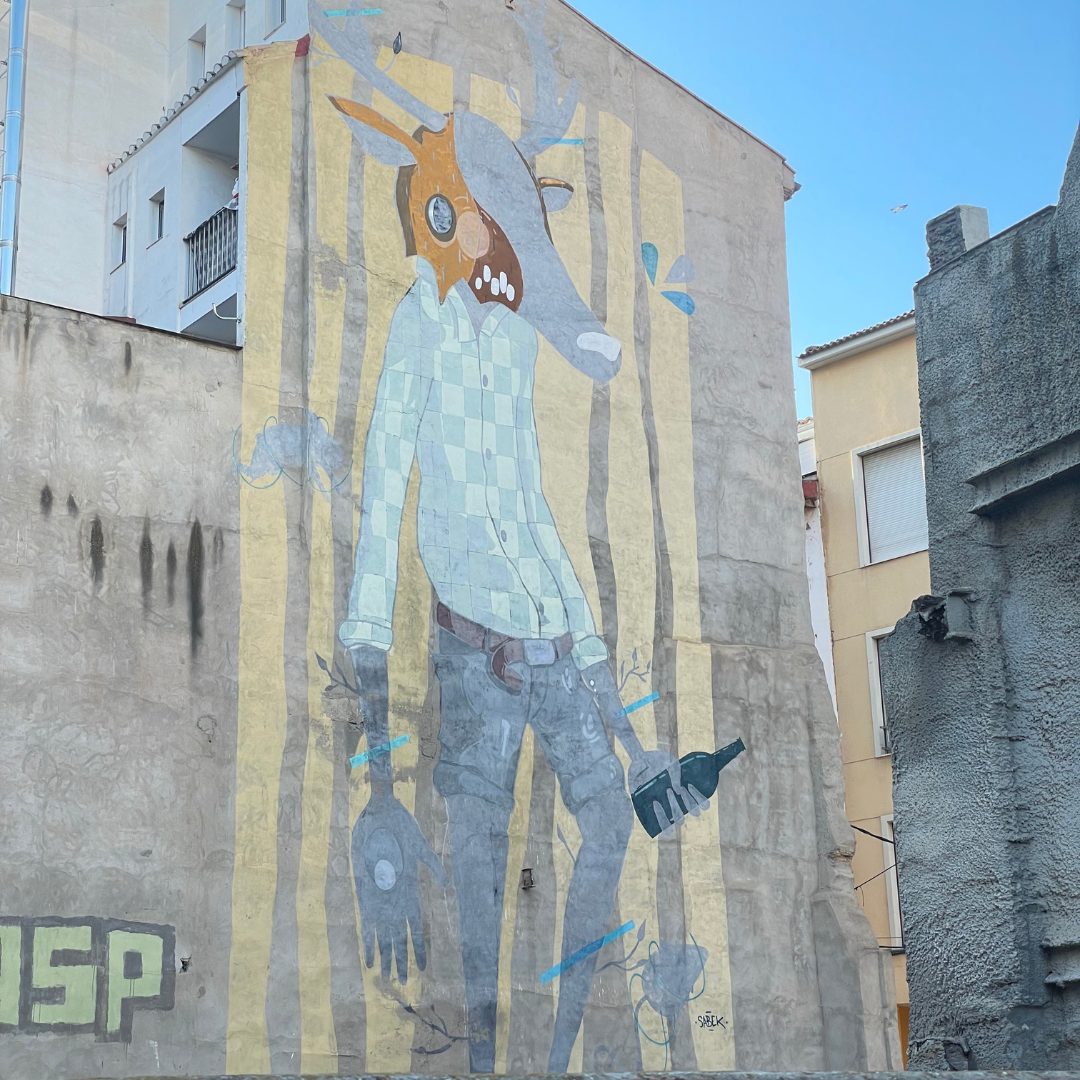
El Gancho Street Art
This local neighbourhood is famous for its street art scene. You can see many murals around Calle de Las Armas and its side streets. It’s around this area you’ll find many of the artworks produced during the city’s annual urban art festival Asalto.

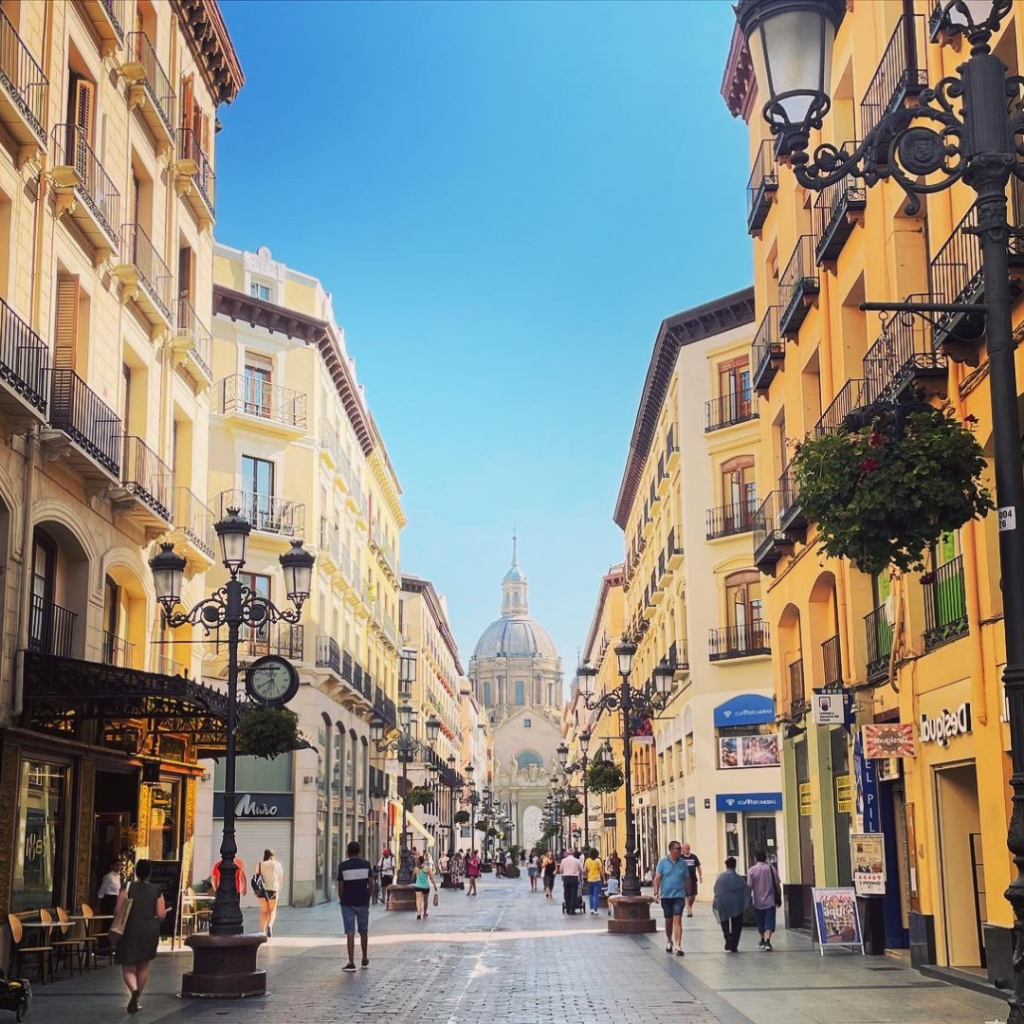
Calle Alfonso
Undoubtedly the most photographed in Zaragoza, both by locals and tourists. Calle Alfonso is a beautiful pedestrian street full of houses and some original shops from the 19th century. It is also a street that is almost always full of people.
Plaza de la Seo
The Plaza de la Seo remains a shelter for residents and visitors looking to have a wine, beer or a snack quietly. It’s not easy to find a place to sit, but when you do, it’s one of those places to fall in love with Zaragoza and the world in general.

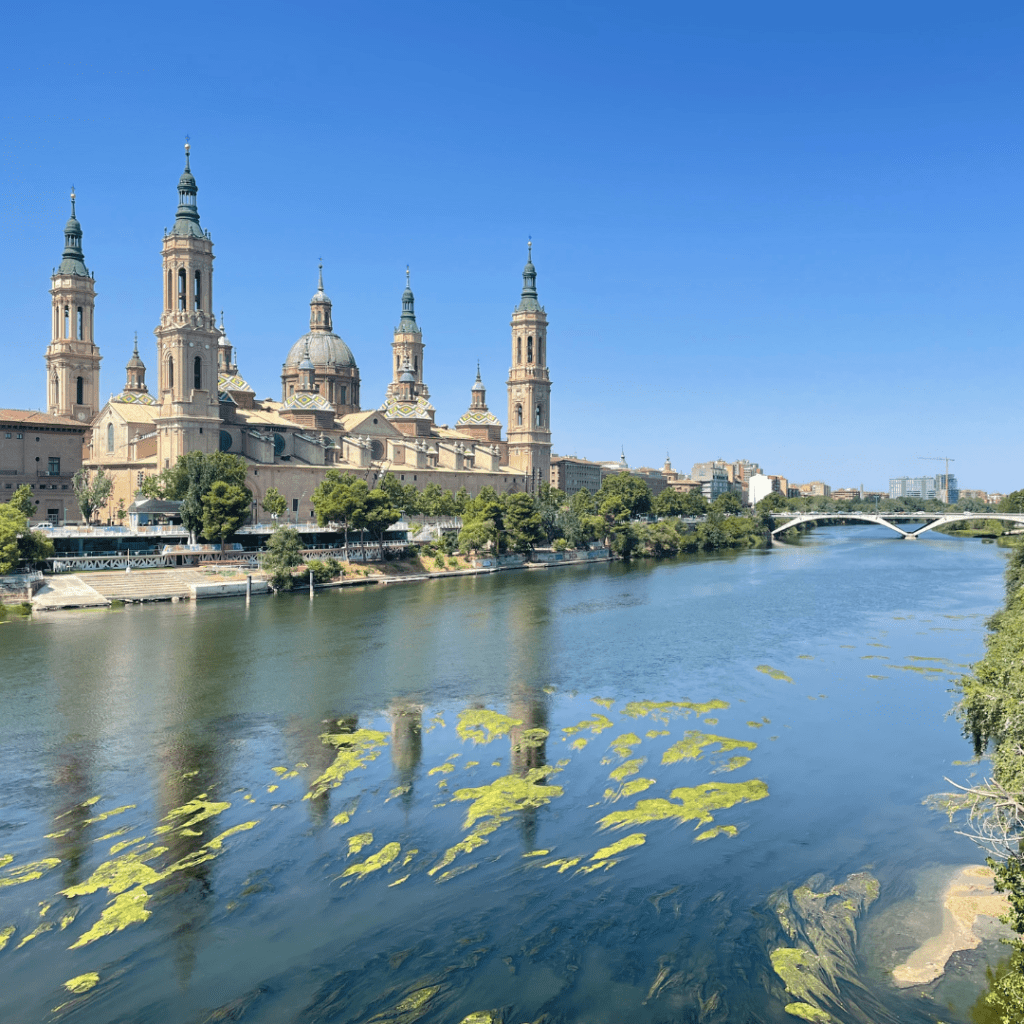
Basílica del Pilar and Stone Bridge (Puente de Piedra)
This bridge is just the other side of the Basilica and run’s across the River Ebro. It’s also called the bridge of Lions due to the lions that sit on the pillars at the ends of the bridge. The bridge connects the historic centre with a more commercialized and residential side of the city. Walking along this bridge also gives you a great photo position of the Basilica with the river in front. By the way, did you know, that the lion is the symbol of the city? You can find it on the flag, in the emblem of the city and as part of the Real Zaragoza football club.
El Tubo
Spanish TAPAS with glass of Spanish wine can be enjoyed in the El Tubo district, in a tangle of narrow streets and adorable TAPAS bars in the heart of the historic center. In the 90’s it was a no-go area and has only been cleared up fairly recently using an initiative started by the shop and bar owners in the area.


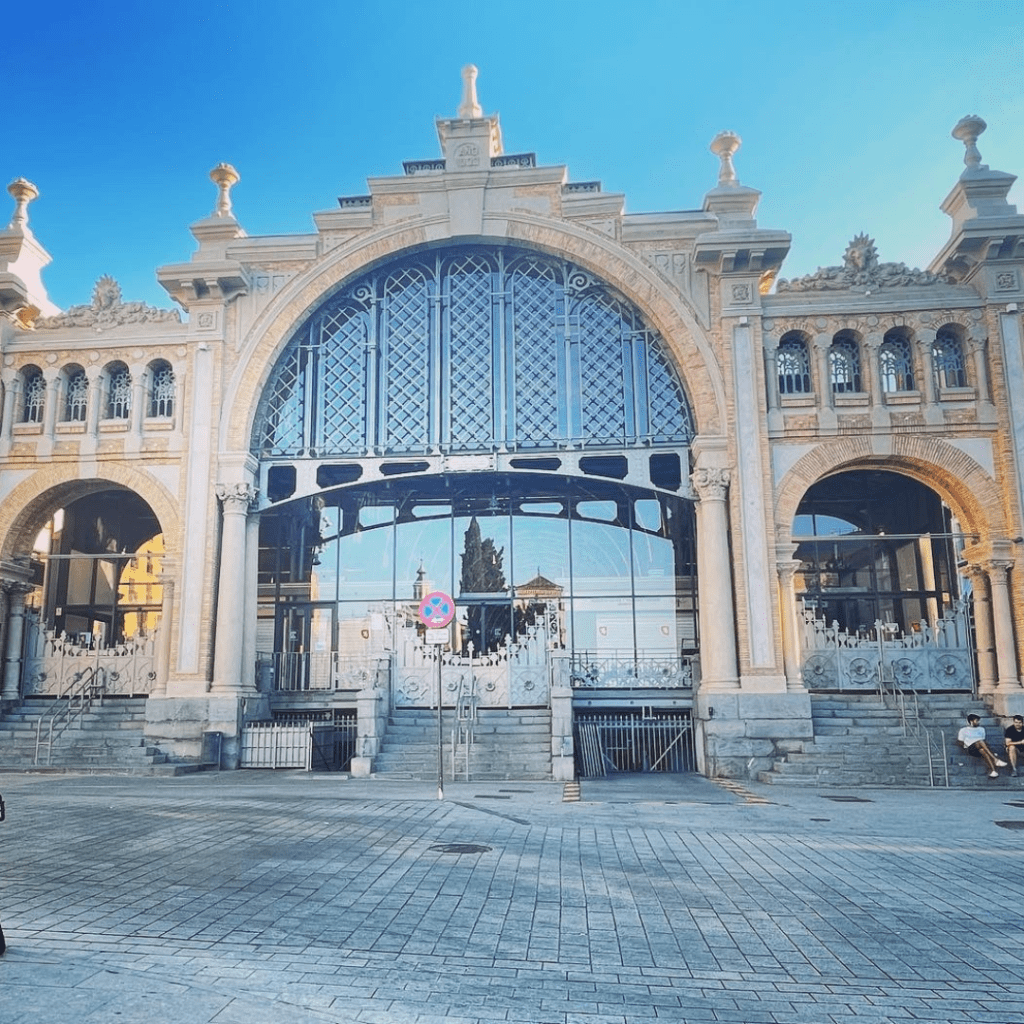
Mercado Central
While walking through the city, don’t miss the Mercado Central, a market, that impresses not only with fresh food and dishes, but also with architecture.
Roman monuments
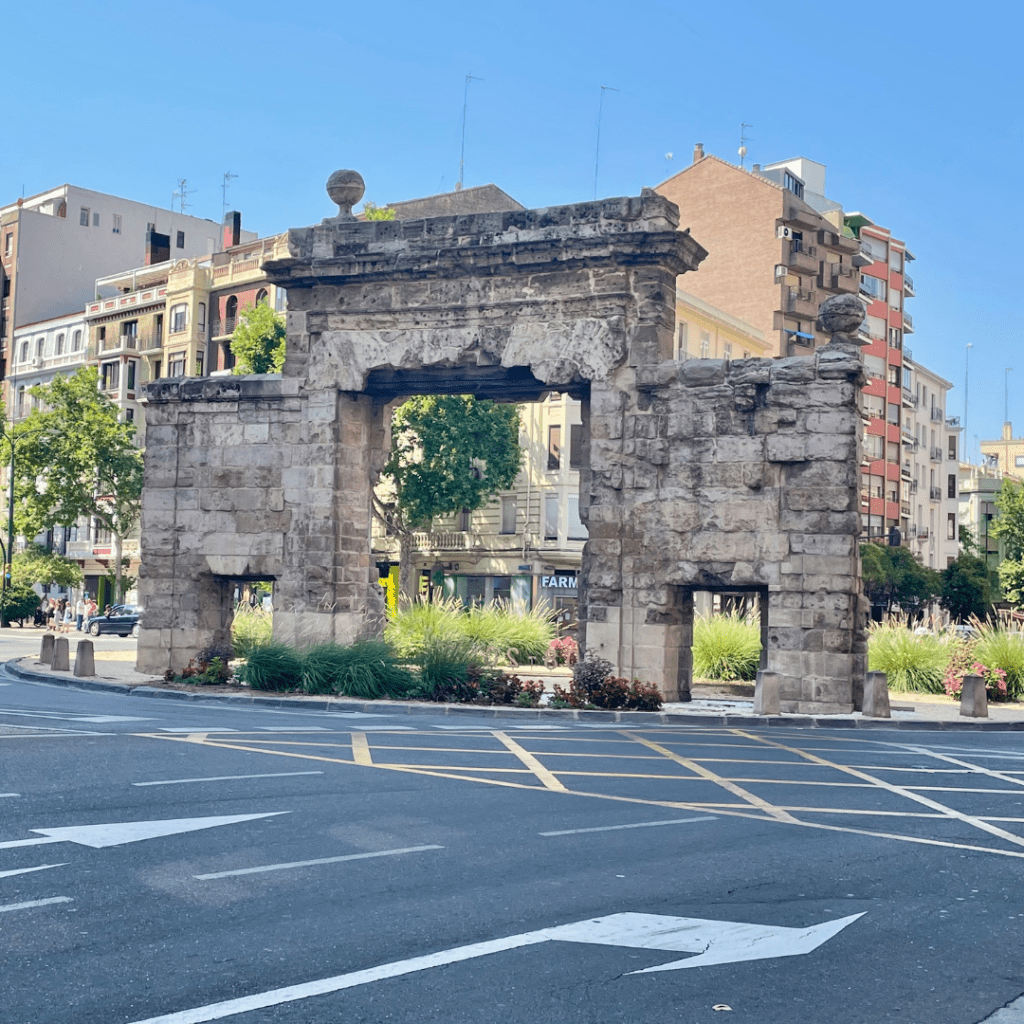
The history of Zaragoza dates back to the Roman Empire, and that is also the reason, why you will find many Roman monuments here while wandering around the city. Roman Theater, Roman Forum, or Roman Baths.
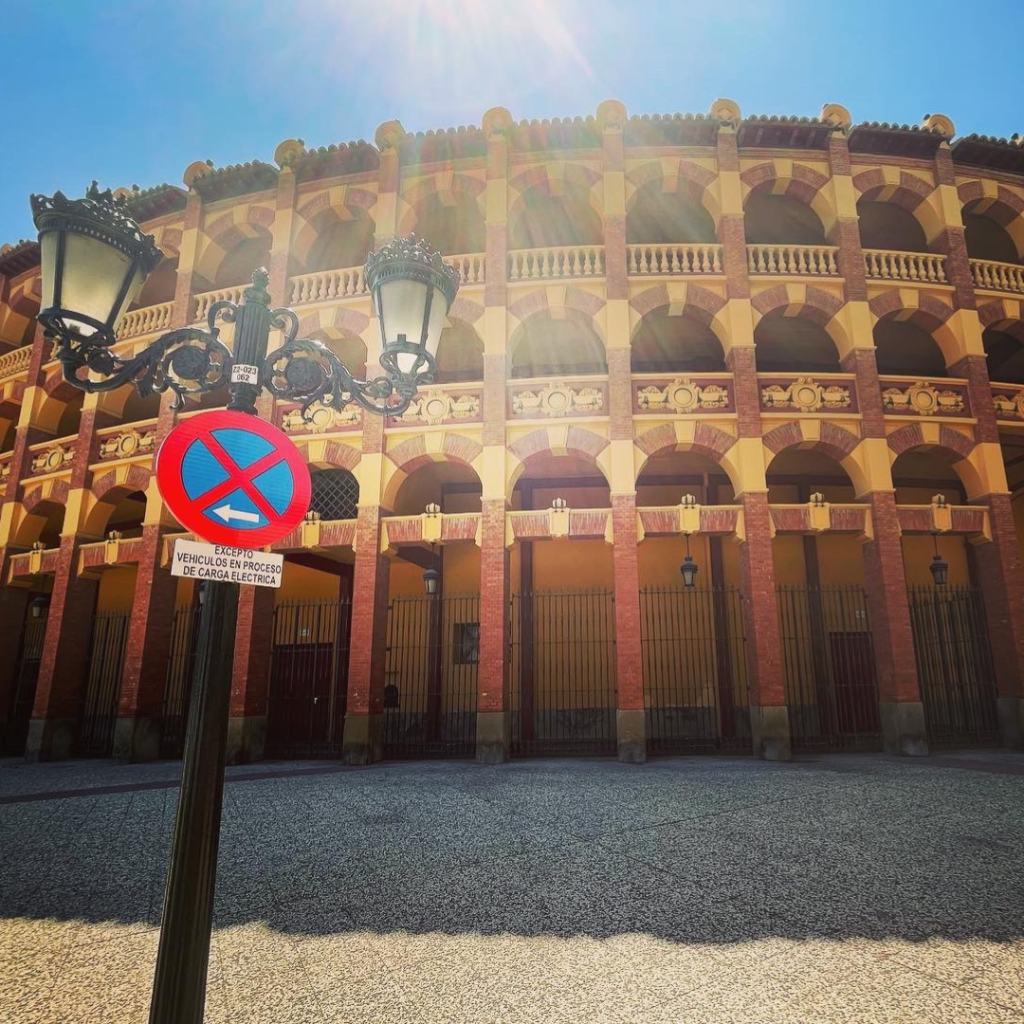
Palacio de la Aljafería
The history of the palace began to be written in the 11th century. You will find arches, vaults, a courteyard with gardens and historic halls. Currently, the palace is the seat of the Aragonese parliament. You can walk around the palace for free, entry is possible based on an online reservation and costs 5€. However, the tour is free every first Sunday and every first Monday of the month.

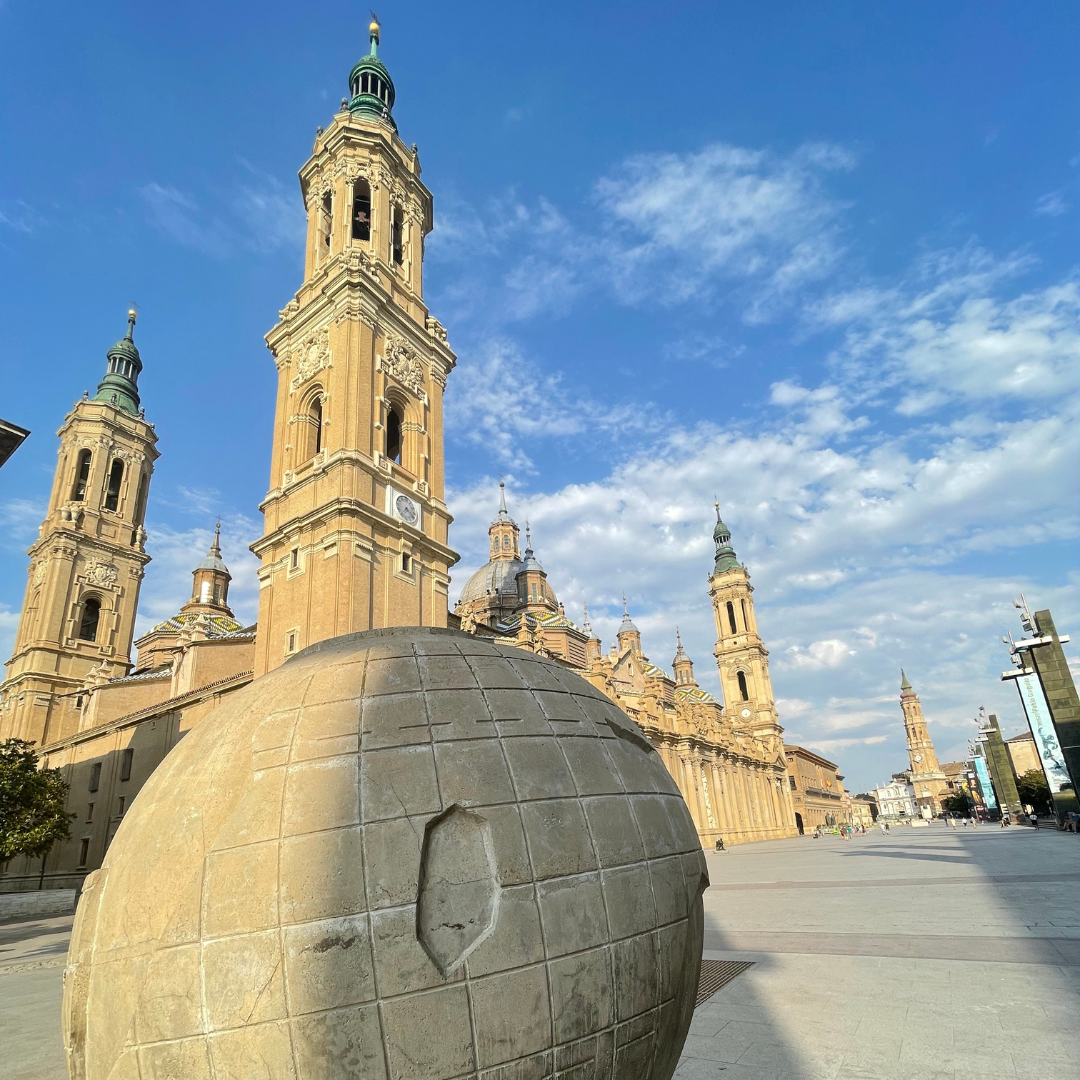
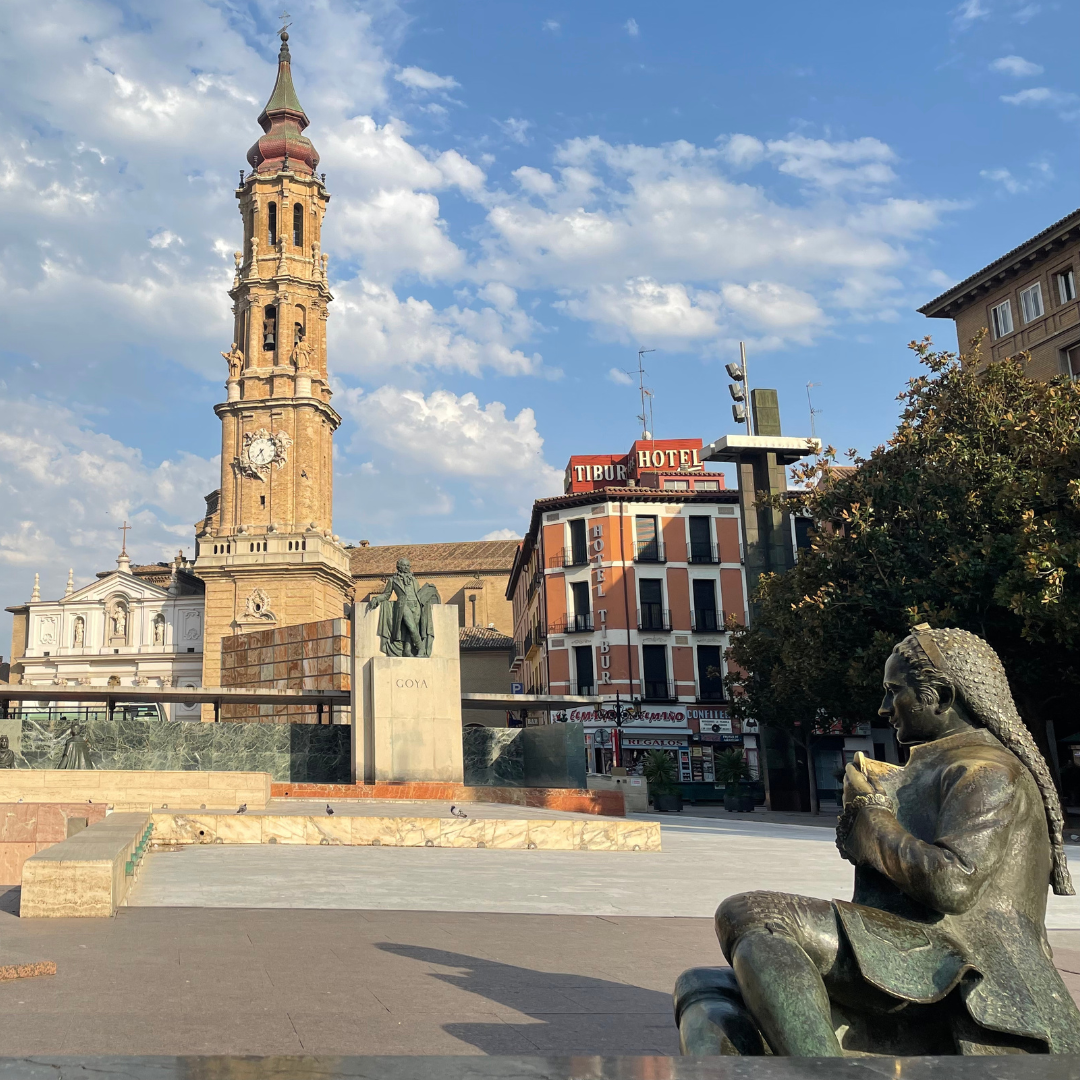
Plaza del Pilar
It is said to be one of the largest pedestrian squares in Europe. In addition to the basilica, you will also find the Fuente de la Hispanidad fountain, whose silhouette represents the contours of Latin America. There’s also huge globe, or a statue of Francisco Goya.
Zaragoza water tower
The 76-meter high Torre del Aqua water tower is a modern structure, the construction of which cost 40 million euros. It has 23 floors and is one of the tallest building in the city. It was built in 2008 on the occasion of the International Expo. It’s currently closed and has no special use.

Puente del Tercer Milenio
The Third Millenium Bridge is a modern bridge in Zaragoza, that was opened in 2008. It’s a very popular especially for walking and cycling. There’s a beautiful view from the bridge on the Ebro river.

WHAT TO EAT IN ZARAGOZA?
- MIGAS: made with bread and bacon, you can also add sausage and grapes.
- JALAPENO CROQUETTES: the combination of a delicious cheese and jalapeno pepper in a small croquette is the perfect TAPAS to a glass of Spanish wine.
- TATAKI BATURRO: marinated Pyreneas veal, with oregano and borage cream.
- Crispy and crunchy JAPANESE PANKO FRIED SHRIMPS with an aromatised Orange wine VINO NARANJA.
- CHILINDRON: perfect dish made with chicken, vegetable, tomato, pepper and onion.
- JAMON IBERICO & MANCHEGO CHEESE: delicious and iconic Spanish TAPAS.

 uniqueplacestosee.com